
Block Paving vs Resin Bound Driveways: A Comparison
Key takeaways
- Block paving offers unmatched repairability and design variety, making it ideal for traditional properties.
- Resin bound driveways are permeable by default, avoiding the need for planning permission on front driveways over five square metres.
- Both options last twenty to twenty-five years when installed on a properly prepared sub-base.
- Resin bound surfacing is lower maintenance but slightly more expensive than standard block paving.
- Sub-base preparation is the single most important factor in driveway longevity regardless of surface material.
If you are thinking about replacing your driveway, two of the most popular options available to homeowners in the Windsor and Maidenhead area are block paving and resin bound surfacing. Both have their strengths, and the right choice depends on your property, your budget and your priorities. Having installed both types extensively across Berkshire, we are often asked to explain the differences, so here is an honest comparison to help you decide.
Block paving: the classic choice
Block paving can be lifted and relaid for repairs or utility access without leaving a visible patch.
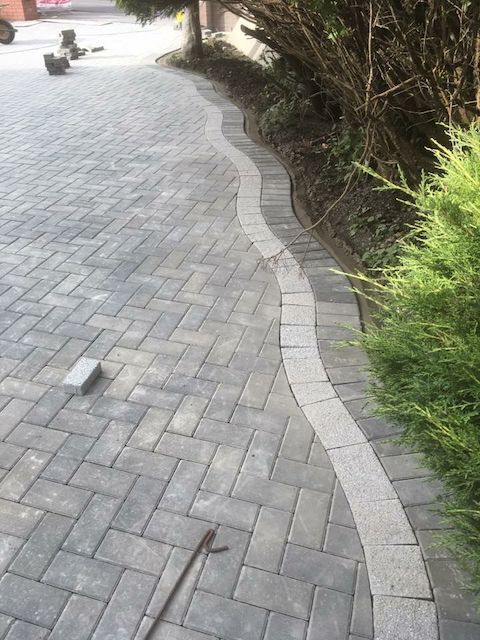
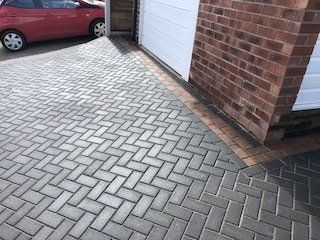
Block paving has been a popular driveway choice for decades and for good reason. It consists of individual concrete or clay blocks laid in an interlocking pattern on a compacted sub-base with a sand bed. The range of colours, shapes and laying patterns available is enormous, which means block paving can be tailored to suit almost any property style, from a modern detached house to a period cottage. Herringbone, basketweave and stretcher bond are among the most common patterns, and each gives a distinctly different look. Clay blocks tend to retain their colour better over time than concrete, though they come at a higher price point.
One of the key advantages of block paving is its repairability. If a section becomes damaged — from oil staining, a cracked block or subsidence beneath — you can lift the affected blocks, address the underlying issue and relay them. With resin bound surfacing, localised repairs are possible but achieving a seamless finish is more difficult because colour matching between batches can vary slightly. For a driveway that may need utility access in the future — if there are service pipes or cables running beneath, for instance — block paving offers a practical advantage because it can be lifted and relaid without leaving a visible patch.
Resin bound: the modern alternative
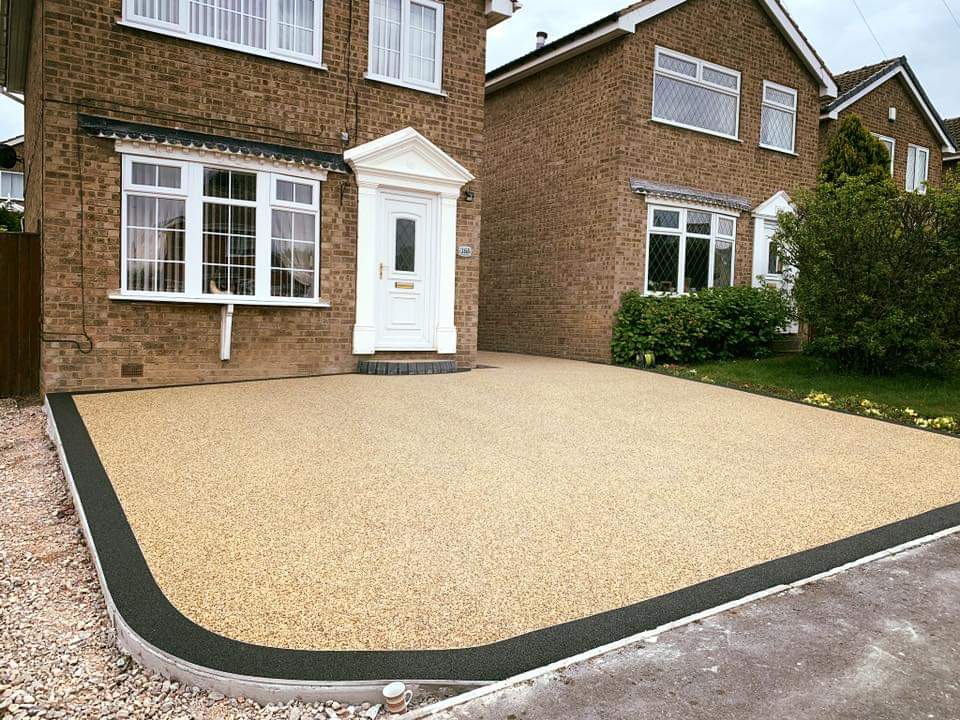
Resin bound surfacing is a more recent arrival in the UK market but has become increasingly popular over the past ten years. It consists of natural aggregate stones mixed with a clear resin binder, which is trowelled onto a prepared base to create a smooth, seamless surface. The finish is attractive and contemporary, with a natural stone appearance that suits many property types. Because the aggregate is bound within the resin rather than scattered loosely on top, the surface is stable and does not shed stones the way resin bonded surfaces sometimes do. It is worth noting the distinction — resin bound and resin bonded are different products, and resin bound is the superior option for driveways.
Drainage and planning
A permeable driveway surface does not require planning permission under permitted development rights, saving time and cost.
Drainage is one area where resin bound surfacing has a clear advantage. A properly installed resin bound driveway is permeable, meaning rainwater drains through the surface and into the ground below rather than running off into the road or drainage system. This is an important consideration because of SuDS (Sustainable Drainage Systems) regulations. Under current planning rules, if you are replacing a front driveway with an impermeable surface that exceeds five square metres, you need planning permission from the Royal Borough of Windsor and Maidenhead. A permeable surface — whether resin bound or permeable block paving — does not require planning permission under permitted development rights, which saves time and cost.
Block paving can also be made permeable by using specially designed blocks with wider joints that allow water to pass through, or by using a permeable sub-base system. However, standard block paving with narrow joints and a conventional sand bed is not permeable, so if you want to avoid the planning permission requirement, you need to specify a permeable system from the outset. Your installer should be able to advise on the most appropriate approach for your particular site.
Cost comparison
In terms of cost, block paving is generally the more affordable option, particularly at the entry level. A standard concrete block paving driveway in the Windsor area typically starts from around fifty to seventy pounds per square metre for supply and installation, depending on the block chosen and the complexity of the layout. Resin bound surfacing tends to be somewhat more expensive, typically in the range of sixty to ninety pounds per square metre, though prices vary depending on the aggregate selected and the condition of the existing base. If the existing sub-base is sound, resin bound can sometimes be laid directly over it, which reduces the overall cost. If a new base is needed, the cost increases accordingly.
Maintenance
Maintenance requirements differ between the two options. Block paving needs periodic attention to keep it looking its best. Weeds can grow in the joints between blocks, and the jointing sand can wash out over time and need topping up. Moss and algae can develop on the surface, particularly in shaded areas, and an occasional pressure wash is usually needed. Ants can also disturb the jointing sand, creating small mounds between the blocks. None of these are serious problems, but they do require a degree of ongoing upkeep. Resin bound driveways are lower maintenance in general — the seamless surface does not provide joints for weeds to colonise, and occasional cleaning with a pressure washer on a low setting is usually all that is needed. However, resin bound surfaces can be susceptible to staining from oil or fuel spills if not treated promptly.
Durability is broadly comparable between the two options when they are installed correctly. A well-laid block paving driveway on a properly prepared sub-base should last twenty to twenty-five years or more before any significant refurbishment is needed. Resin bound surfacing has a slightly shorter proven track record in the UK, but manufacturers typically quote a lifespan of fifteen to twenty-five years depending on the product and the level of traffic. Both surfaces will last significantly longer if the sub-base preparation is done properly — this is the single most important factor in the longevity of any driveway, regardless of the surface material.
Which is right for you?
Aesthetically, the choice often comes down to personal preference and the style of your property. Block paving tends to suit traditional and suburban properties well, and the variety of patterns and colours available means it can be adapted to almost any setting. Resin bound surfacing has a cleaner, more contemporary look that works particularly well with modern architecture, though it also complements period properties when a neutral aggregate colour is chosen. Both options can incorporate features like contrasting borders, and both can be used for paths and patios as well as driveways to create a cohesive look across the front of the property.
One final consideration is the installation process and timeline. Block paving is a labour-intensive process that typically takes three to five days for an average-sized driveway, depending on the complexity of the design and the amount of groundwork required. Resin bound surfacing can often be completed more quickly — sometimes in one to two days for the surface itself — though the sub-base preparation may take additional time. Both options require dry weather during installation, which is always worth factoring in when planning the work.
At Maybach Building & Property Maintenance Ltd, we install both block paving and resin bound driveways across Windsor, Maidenhead and the surrounding areas. We are happy to discuss the pros and cons of each option for your specific property and to provide a detailed quotation. If you are unsure which option suits you best, we can arrange a site visit to assess the existing ground conditions and help you make an informed choice. A well-installed driveway adds real value to your home and improves its kerb appeal, so it is worth taking the time to get the decision right.