
Common Chimney Problems in Older Properties
Key takeaways
- Mortar degradation from freeze-thaw cycles is the most common chimney problem on period homes
- Always use lime mortar — not cement — when repointing chimneys built with lime
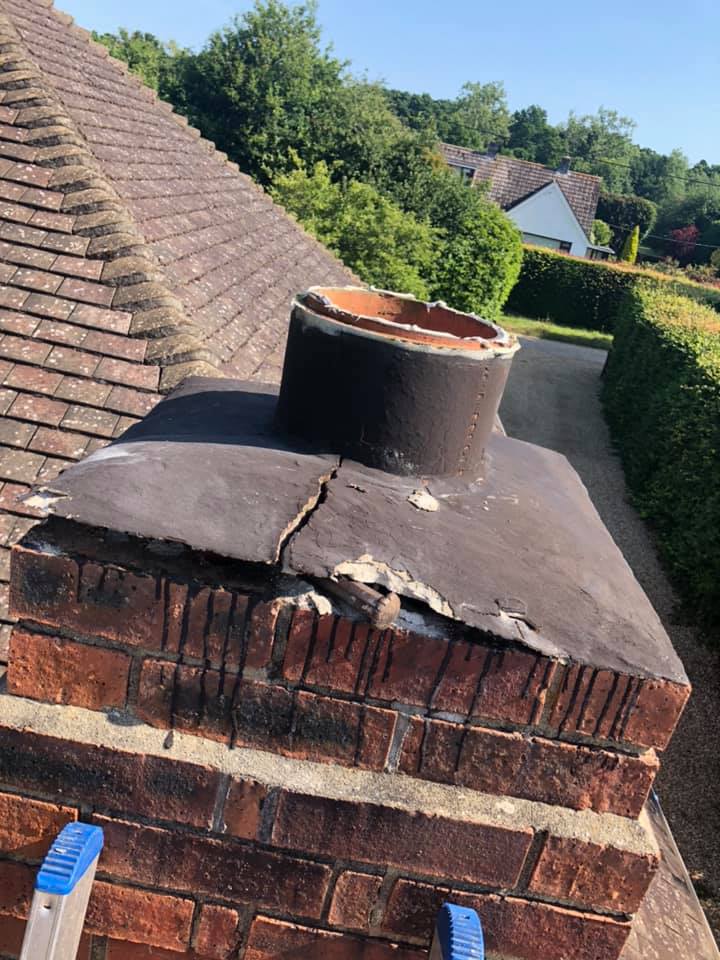
- Cracked flaunching and failed lead flashing are leading causes of chimney damp
- Unused chimneys still need ventilation to prevent internal condensation and mould
- Have your chimney inspected every two to three years to catch problems early
The Windsor and Maidenhead area has a rich stock of period properties, from Victorian terraces near the town centre to Edwardian semi-detached homes throughout the surrounding villages. These houses have a great deal of character, but they also come with maintenance requirements that more modern properties do not share. One of the most common problem areas is the chimney. Chimneys on older properties are exposed to the worst of the weather, and after a hundred years or more of wind, rain, frost and sun, they inevitably need attention.
Why older chimneys are vulnerable
This cycle of freeze and thaw accelerates the damage each year, and if it is not addressed the chimney stack can become structurally unsound.
The most widespread issue we encounter on period chimneys is mortar degradation. The mortar between the bricks of the chimney stack is constantly exposed to the elements, and over decades it erodes, cracks and crumbles. You can often spot this from the ground — look for gaps between the bricks where the mortar has receded, or for loose sandy material collecting on the roof tiles below the chimney. When mortar joints deteriorate significantly, rainwater can penetrate into the brickwork. In winter, that water freezes and expands, forcing the joints open further. This cycle of freeze and thaw accelerates the damage each year, and if it is not addressed the chimney stack can become structurally unsound.
Mortar degradation and repointing
Repointing — the process of raking out the old mortar and replacing it with new — is the standard remedy, but on period properties it needs to be done carefully. Many older chimneys were originally built with lime mortar, which is softer and more flexible than modern Portland cement. Using a hard cement mortar to repoint a chimney that was built with lime can actually cause more harm than good. The cement is less permeable than lime, so moisture becomes trapped inside the brickwork rather than being able to evaporate through the joints as it was designed to do. The cement is also harder than the surrounding brick, which means that when movement occurs — and all buildings move slightly with temperature changes — the brick cracks rather than the mortar. For period chimneys, a lime-based mortar that matches the original specification is almost always the right choice.
Cracked pots and flaunching
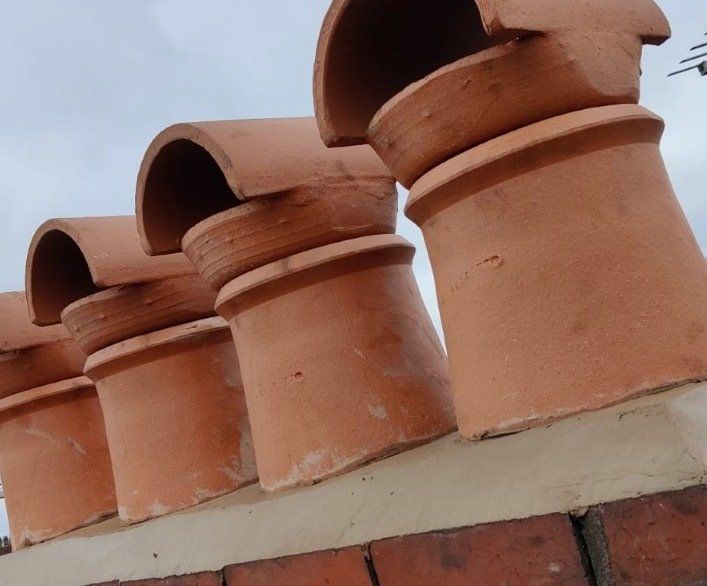
Cracked or missing chimney pots are another frequent problem. The clay pots that sit on top of the chimney stack are there to improve the draw of the flue and to prevent rain from falling directly down it. Over time, these pots can crack from thermal expansion, or the mortar bedding that holds them in place can fail, leaving them loose and potentially dangerous. A loose chimney pot in a storm is a genuine safety hazard — they are heavy enough to cause serious injury or damage if they fall. If you can see cracks in your chimney pots or if they appear to be leaning, it is worth having them checked. Replacement pots are readily available in styles that match the originals, and a good roofer will be able to bed them securely.
The flaunching — the sloped cement cap that surrounds the base of each chimney pot and seals the top of the stack — is another area prone to failure. Flaunching cracks over time due to exposure to frost and heat. Once it cracks, water gets in and begins to erode the top courses of brickwork from above. Damaged flaunching is one of the most common causes of chimney damp that we see across Windsor and Maidenhead. Replacing flaunching is a straightforward job for a roofer with scaffold or ladder access, and it is far cheaper to do proactively than to deal with the water damage that results from neglecting it.
Lead flashing failure
Lead flashing where the chimney meets the roof surface is a critical waterproofing detail, and on older properties it frequently needs attention. Traditional lead flashing is dressed into a mortar joint in the brickwork and lapped over the roof tiles to create a watertight seal. Over many years, the lead can fatigue and crack, or the mortar pointing that holds it in the wall can fail. When this happens, water runs behind the flashing and into the building, often causing damp patches on the ceiling of the room below. Re-dressing or replacing chimney flashing is one of the most common repairs we carry out, and when done properly it will last for decades.
Damp from unused chimneys
If the chimney is capped off completely at the top and sealed at the bottom, moisture has no way to escape — leading to damp, staining and mould on the chimney breast.
Damp caused by unused chimneys is a surprisingly common issue in older homes. When a fireplace is no longer in use, the chimney flue still needs ventilation. If the chimney is capped off completely at the top and sealed at the bottom, moisture that naturally occurs within the flue has no way to escape. It condenses on the internal walls and can cause damp patches, staining and even mould growth on the chimney breast inside the house. The solution is straightforward: fit a ventilated chimney cap at the top, which keeps rain out but allows air to circulate, and ensure there is an air vent in the fireplace opening at the bottom. This simple approach keeps the flue dry and eliminates the damp problem.
Lime mortar vs cement
Some chimney problems on period properties are structural. Over a very long period, chimneys can lean. This is usually caused by the deterioration of mortar on the weather-facing side, which allows that side of the stack to erode faster than the sheltered side. A leaning chimney is not something to ignore — depending on the degree of lean, it may need to be partially or fully rebuilt. In Windsor, where many properties are terraced or semi-detached, a chimney that collapses can damage neighbouring properties as well. If you notice your chimney is not quite vertical, have it assessed by a professional sooner rather than later.
Sulphate attack is a less well-known problem but one that affects older chimneys quite frequently. When a chimney has been used for burning coal or wood over many decades, sulphate deposits build up inside the flue lining. If moisture penetrates from outside, it can react with these deposits and cause the internal render to expand and push the brickwork outward. This is sometimes visible as bulging on one side of the chimney stack. It is a serious issue that usually requires the chimney to be relined or rebuilt, and it underlines the importance of keeping moisture out of old flues.
Regular inspections
Regular inspection is the single most effective way to manage chimney problems on older properties. We recommend having your chimney checked at least every two to three years, and more frequently if you notice any signs of damp, loose material or visible damage. Many of the problems described above are inexpensive to fix when caught early but can lead to significant repair bills if left to develop. A qualified roofer can assess the chimney from scaffold or roof level, check the mortar, flashing, flaunching, pots and capping, and give you a clear picture of what, if anything, needs doing.
At Maybach Building & Property Maintenance Ltd, we have extensive experience working on period chimneys throughout Windsor, Maidenhead and the wider Berkshire area. We understand the specific requirements of older buildings, including the use of appropriate lime mortars and sympathetic repair techniques. If your chimney is showing signs of wear, or if you simply want the peace of mind that comes from a professional inspection, do get in touch. Catching problems early is always better than dealing with the consequences of neglect.