
EPDM vs GRP: Which Flat Roof System Is Right for You?
Key takeaways
- EPDM rubber roofing lasts 50+ years; GRP fibreglass lasts 35-40 years
- EPDM is typically cheaper, especially for larger simple areas like garages
- GRP is better suited to walked-on surfaces and balconies
- Both systems far outlast traditional felt flat roofs
- Quality installation matters as much as the choice of material
If your flat roof is leaking, ponding water or simply reaching the end of its life, you have probably come across two acronyms more than any others: EPDM and GRP. These are the two most popular modern flat roofing systems in the UK, and both represent a significant step up from the traditional built-up felt roofs that were standard for decades. But which one is the right choice for your property? In this guide we break down the key differences to help you make an informed decision.
EPDM stands for ethylene propylene diene monomer — a synthetic rubber membrane that is manufactured in large sheets and bonded to the roof deck. It has been used in commercial roofing since the 1960s and has an excellent long-term track record. GRP stands for glass reinforced polyester, more commonly known as fibreglass. A GRP flat roof is built up on site by laying sheets of glass fibre matting into a liquid resin, which hardens to form a seamless, rigid shell. Both systems are widely used on domestic properties across Windsor, Maidenhead and the rest of Berkshire.
Lifespan comparison
EPDM rubber roofing has a projected lifespan of 50 years or more. GRP fibreglass roofs typically last 35 to 40 years.
One of the first questions homeowners ask is how long each system will last. EPDM rubber roofing has a projected lifespan of 50 years or more when correctly installed. Because the membrane is a single continuous sheet with no seams over most of the roof area, there are very few weak points where water can penetrate. GRP fibreglass roofs have a typical lifespan of 35 to 40 years, which is still excellent compared with felt. The laminated structure is extremely tough and resistant to impact, foot traffic and UV exposure. Both systems carry manufacturer-backed guarantees of 20 to 25 years as standard.
Cost considerations
Cost is inevitably a major consideration. As a general guide, EPDM tends to be slightly cheaper on a per-square-metre basis, particularly for larger, simpler roof areas such as garages and outbuildings. The material itself is less expensive than GRP resin and matting, and installation is somewhat faster because the membrane is rolled out and adhered rather than built up in layers. GRP is typically a little more expensive due to the materials and the skilled laminating work required, but the price difference on a typical domestic flat roof — say a single-storey rear extension — is often only a few hundred pounds. We always recommend getting quotes for both options so you can compare like for like.
How EPDM is installed
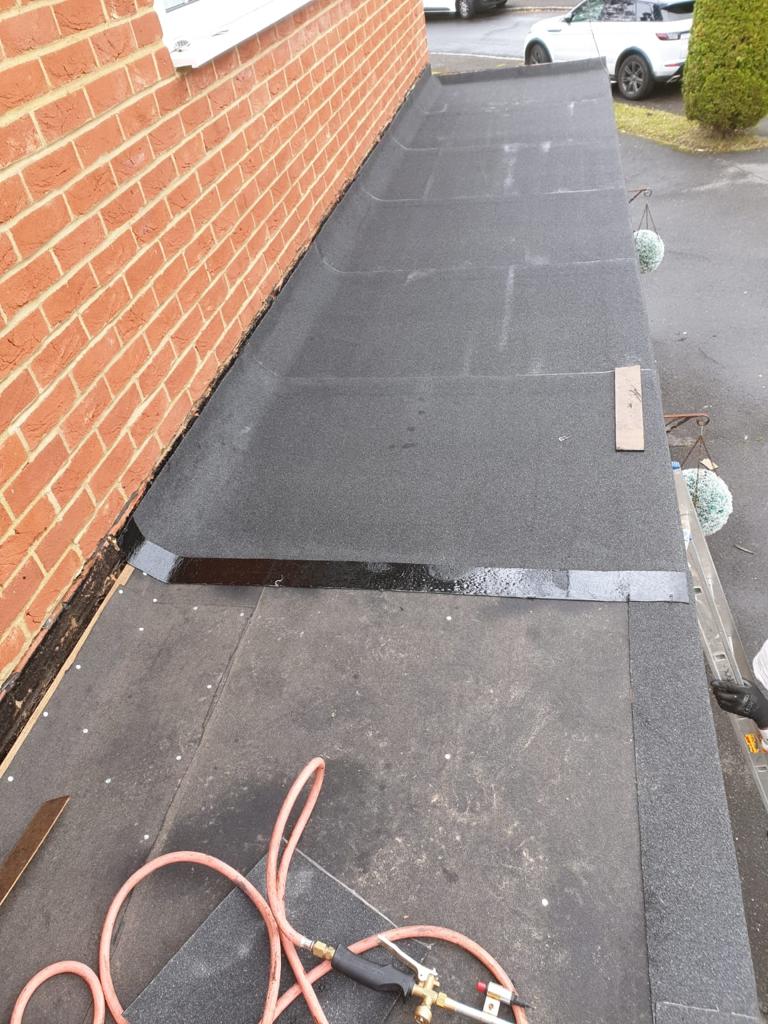
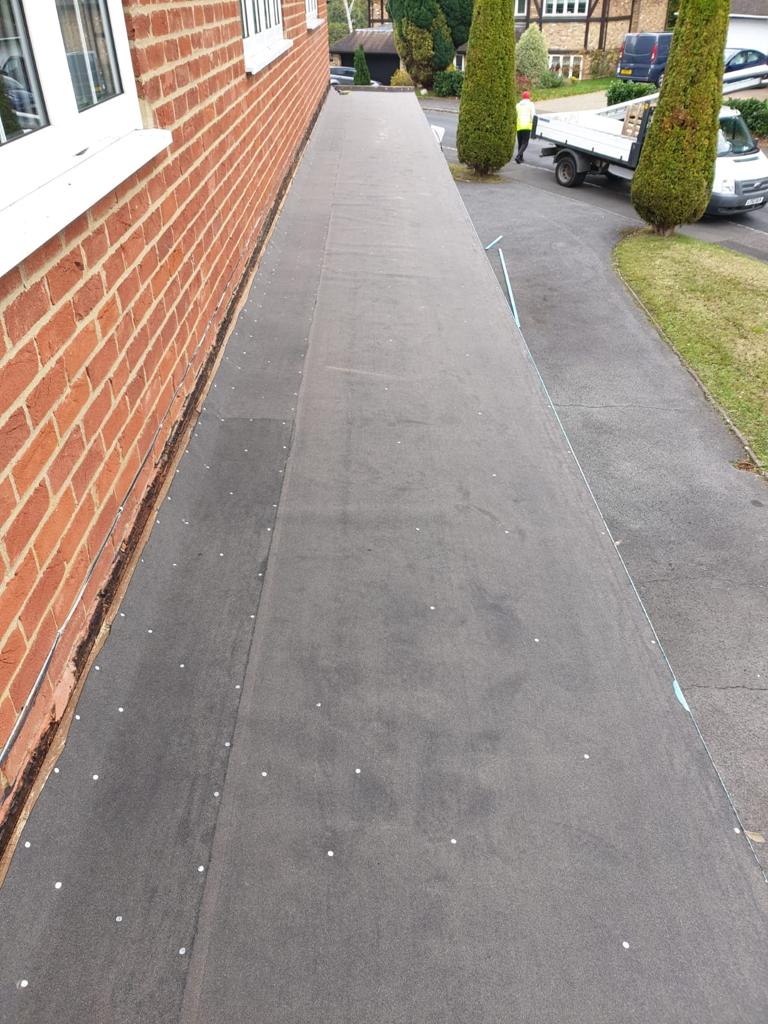
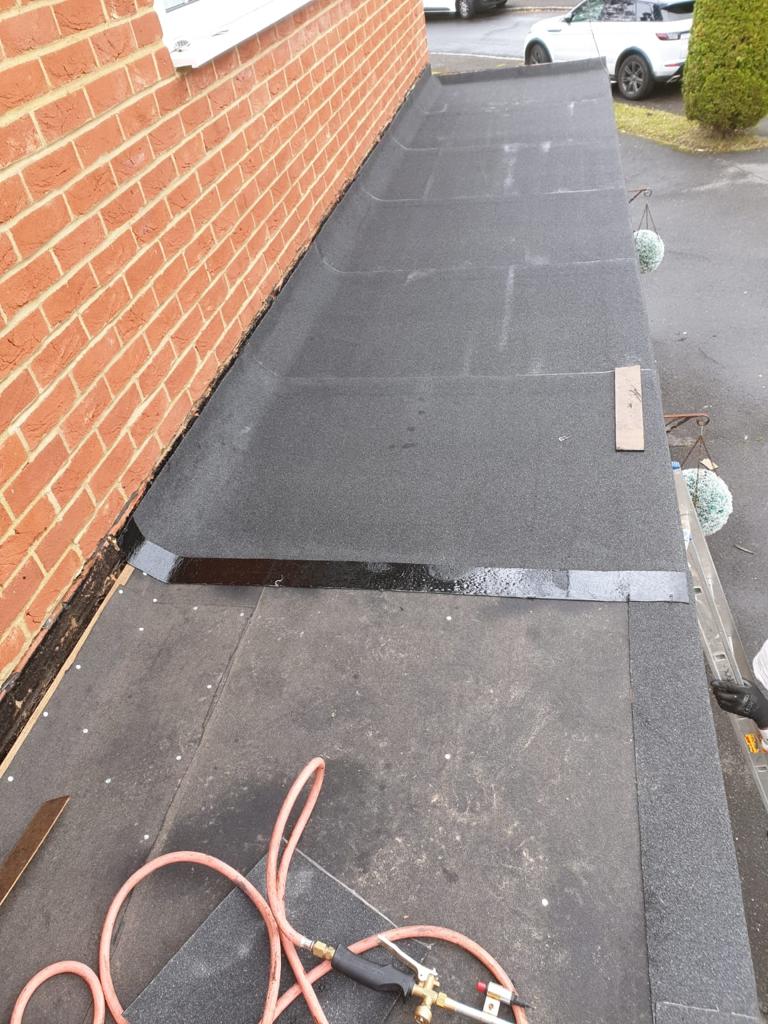
The installation process differs quite significantly between the two systems. EPDM installation involves preparing the roof deck, applying adhesive and carefully rolling out the rubber membrane, ensuring there are no air bubbles or wrinkles. The edges are trimmed and sealed, and any upstands, outlets or penetrations are detailed with preformed corners and flashing strips. The whole process is relatively clean and quiet, and a typical garage roof can be completed in a single day.
How GRP is installed
GRP installation is more labour-intensive. The roof deck — usually exterior-grade plywood — is first primed with a resin coat. Sheets of chopped strand glass fibre mat are then laid into wet resin and rolled to remove air, building up a strong laminate layer by layer. A topcoat resin is applied to provide the finished surface, and this can be pigmented in a range of colours — grey being the most common. GRP requires dry conditions during installation, as moisture can interfere with the curing process. A straightforward extension roof will usually take one to two days.
Durability and maintenance
In terms of durability and maintenance, both systems score highly. EPDM is inherently flexible, which means it copes well with the natural expansion and contraction that flat roofs undergo as temperatures change through the seasons. It is also highly resistant to UV radiation and does not become brittle over time. However, the rubber surface can be punctured by sharp objects, so care should be taken if the roof is walked on for maintenance access. Minor punctures can be patched with EPDM repair tape.
GRP is extremely rigid once cured, giving it excellent resistance to foot traffic and impact. This makes it a popular choice for flat roofs that double as balconies or terraces, or where regular access is needed for window cleaning or maintenance of plant equipment. The hard surface is also less prone to moss and algae growth than rubber. On the downside, the rigid nature of GRP means it can develop hairline cracks over time if the underlying deck moves significantly, although this is rare when the substrate is correctly specified and fixed.
Aesthetics
Aesthetics may also play a role in your decision. EPDM roofs have a matt black finish that is functional but not especially decorative. They are rarely visible from ground level on most domestic properties, so this is seldom an issue. GRP roofs offer more visual flexibility: the topcoat can be finished in grey, green, black or other colours, and the surface has a smoother, more uniform appearance. For flat roofs that are overlooked by upper-storey windows — common on rear extensions in terraced and semi-detached houses — some homeowners prefer the neater look of GRP.
Which system suits which situation?
So which system is best for which situation? For standalone garages, sheds and outbuildings, EPDM is often the most cost-effective choice. The rubber membrane handles simple, open roof areas very efficiently and the lower material cost makes a noticeable difference on larger footprints. For kitchen and living room extensions, dormer roofs and any area that may be walked on, GRP is generally the stronger option. Its rigid surface, seamless finish and excellent load-bearing characteristics make it well suited to more demanding applications.
There are situations where either system would serve you equally well, and the decision comes down to personal preference and budget. A single-storey rear extension with no foot traffic, for example, would perform admirably with either EPDM or GRP. In these cases we are always happy to talk through the pros and cons in the context of your specific property.
Quality of installation matters
One important point to stress is that the quality of the installation matters at least as much as the choice of material. Both EPDM and GRP can fail prematurely if the deck preparation is poor, the detailing around edges and upstands is inadequate, or the installer cuts corners with materials. At Maybach Building & Property Maintenance Ltd we are approved installers for both systems, and every flat roof we fit comes with a manufacturer-backed guarantee as well as our own workmanship warranty.
If you are based in Windsor, Maidenhead, Slough or the surrounding areas and you are considering a flat roof replacement, we would be happy to visit your property, assess the existing roof and recommend the best system for your needs and budget. Our quotations are detailed and transparent, with no hidden costs.
Get in touch with Maybach Building & Property Maintenance Ltd today for a free, no-obligation flat roof survey. Whether you end up choosing EPDM or GRP, you can be confident that your new flat roof will provide decades of reliable, leak-free protection for your home.