
The Complete Guide to Gutter Maintenance for Homeowners
Key takeaways
- Clean gutters at least twice a year — autumn and spring
- Blocked gutters can cause damp walls, staining and foundation damage
- Professional cleaning costs £50-£120 and removes the risk of working at height
- Persistent leaks at joints mean seals have perished and replacement may be needed
- Modern uPVC guttering lasts around 30 years maintenance-free
Gutters are one of those parts of your home that you probably never think about — until something goes wrong. A blocked or broken gutter might seem like a minor nuisance, but left unattended it can lead to serious and expensive problems including damp walls, stained brickwork, rotting fascia boards and even damage to your foundations. A small amount of regular maintenance is all it takes to keep your guttering system working as it should.
The primary job of your gutters is to collect rainwater as it runs off the roof and channel it safely into the downpipes, which carry it to the drains at ground level. When gutters become blocked with leaves, moss, silt or other debris, water overflows and runs down the face of your walls instead. In the damp climate of Berkshire, this can quickly lead to penetrating damp, green algae staining and deterioration of pointing and render. During freezing weather, water trapped in blocked gutters can freeze and expand, cracking plastic guttering or forcing joints apart.
How often should you clean your gutters?
As a general rule, gutters should be cleaned at least twice a year: once in late autumn after the majority of leaves have fallen, and once in late spring to clear any debris that has accumulated over winter. If your property is surrounded by mature trees — as many homes in Windsor and Maidenhead are — you may need to clean them more frequently. Conifers and evergreen trees shed needles year-round, and these are particularly effective at clogging gutters and downpipes.
Signs your gutters need attention
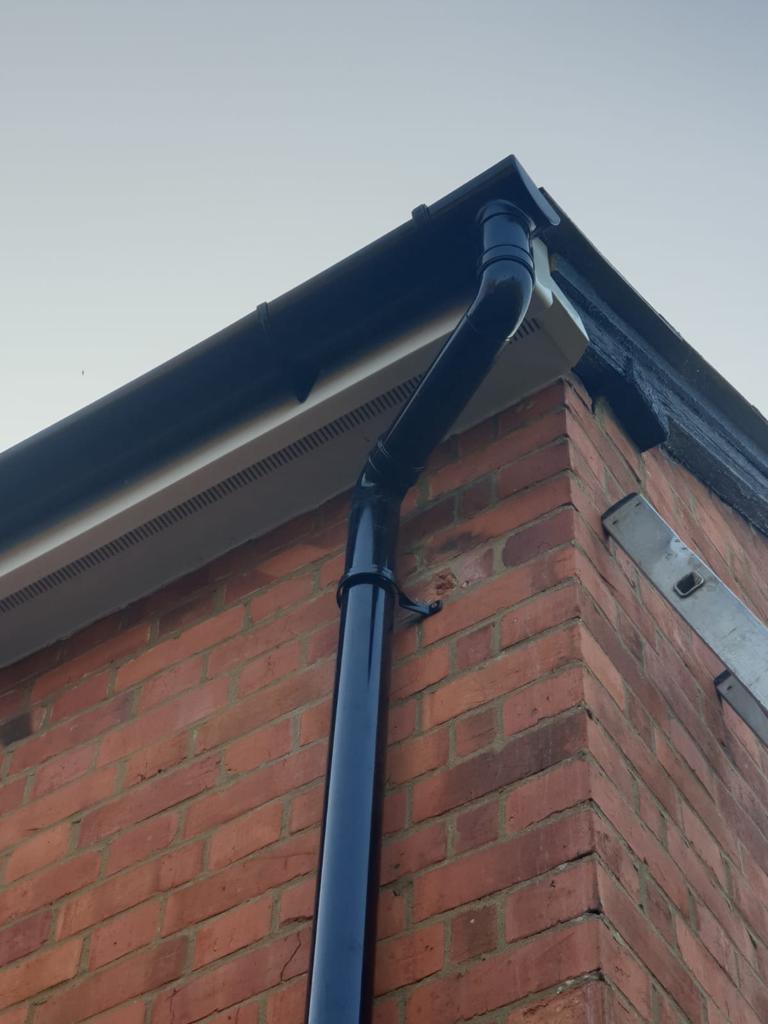
Water cascading over the edge during rainfall is the most obvious sign, but also watch for green streaking on walls and plants growing from the gutter channel.
There are several signs that your gutters may need attention. Water cascading over the edge during rainfall is the most obvious. You might also notice green or black streaking on your walls below the gutter line, plants growing from the gutter channel itself, or a sagging section of guttering that has pulled away from the fascia board. If you can hear a dripping or trickling sound near your walls during or after rain, there is likely a leak at a joint or a crack in the gutter section.
DIY gutter cleaning
If you are comfortable working at height and have a suitable ladder, basic gutter cleaning is a straightforward DIY job. You will need a sturdy pair of gloves, a gutter scoop or small garden trowel, and a bucket or bag to collect the debris. Work along the gutter length, scooping out compacted leaves and silt, then flush the gutter with a garden hose to check the water flows freely to the downpipe outlet. If the downpipe is blocked, a drain rod or a strong jet of water from above will usually clear it.
Why hire a professional?
However, there are good reasons to consider hiring a professional. Working at height carries real risk, particularly on two-storey properties or where the ground is uneven. Professional gutter cleaners use ladders with stand-off brackets, scaffolding or vacuum systems that can clear gutters from ground level without anyone needing to climb up at all. The cost of a professional clean is modest — typically between 50 and 120 pounds for a standard three-bedroom house — and it removes both the physical risk and the time commitment.
When to repair or replace
Beyond regular cleaning, keep an eye out for signs that your guttering needs repair or replacement. Persistent leaks at joints usually mean the rubber seals have perished, and while these can be replaced individually, widespread seal failure is a sign that the system is nearing the end of its life. Cracks and splits in plastic guttering become more common as the material ages and becomes brittle from UV exposure. Sagging sections indicate that the brackets have loosened or the fascia board behind them has softened with rot.
When replacement is needed, the choice today is almost always uPVC for domestic properties. Modern uPVC guttering is lightweight, inexpensive, easy to install and essentially maintenance-free — it will not rust, rot or need painting. It is available in a range of profiles including half-round, square and ogee, and in colours such as white, black, brown and grey to suit different property styles. Cast iron guttering is still available for heritage and conservation area properties, but it is significantly more expensive and requires periodic painting to prevent rust.
Get in touch
At Maybach Building & Property Maintenance Ltd we install and replace complete uPVC guttering and fascia systems across Windsor, Maidenhead, Slough and the surrounding villages. We often carry out gutter replacement as part of a wider roofing project, but we are equally happy to replace gutters and fascias as a standalone job. All our installations include new brackets at the correct spacing, properly aligned falls to ensure efficient water flow, and sealed joints throughout.
Keeping your gutters in good working order is one of the simplest and most cost-effective ways to protect your home from water damage. If you are unsure about the condition of your gutters, or if you would like a quote for cleaning, repair or full replacement, give the Maybach Building & Property Maintenance Ltd team a call. We are always happy to take a look and give you straightforward, honest advice.