
Thinking About a Skylight? What You Need to Know
Key takeaways
- Most skylights can be installed under permitted development without planning permission, but conservation areas may have restrictions.
- Correct flashing installation is the key to a watertight skylight — always use an experienced roofer.
- Double or triple glazing and good room ventilation prevent condensation problems on roof windows.
- A standard roof window installation typically costs between eight hundred and fifteen hundred pounds including supply and fitting.
- Splaying the internal opening allows light to spread further into the room and is worth specifying at the planning stage.
Benefits of skylights
Natural light can completely transform the feel of a room. A space that feels cramped and dark can become open and inviting with the addition of a well-placed skylight. If you have rooms in your home that lack adequate natural light — whether that is a landing, a bathroom, a kitchen extension or a loft conversion — a skylight or roof window may be the most effective solution. Here is what homeowners in the Windsor and Maidenhead area should know before going ahead with an installation.
Types of skylight
The terms skylight and roof window are often used interchangeably, but there is a technical distinction. A roof window is set into the slope of the roof and sits flush or nearly flush with the roof surface, much like a Velux window. A skylight typically refers to a window set into a flat or very low-pitched roof, often with a raised kerb or dome. For the purposes of this article, we will cover both types, as the considerations are broadly similar. There are also tubular skylights, sometimes called sun tunnels, which use a reflective tube to channel daylight from the roof into a room below. These are particularly useful for bringing light into internal rooms that do not have direct access to an external wall or a convenient roof slope.
The choice of skylight type depends on the room below and how you intend to use it. Fixed skylights do not open and are the simplest and most affordable option. They are suitable for rooms where additional ventilation is not needed, such as a hallway or landing. Opening skylights, which can be operated manually or electrically, provide both light and ventilation and are ideal for kitchens, bathrooms and loft rooms where moisture and heat can build up. Centre-pivot roof windows are the most common opening type — the sash rotates around a central hinge, which also allows the outer glass to be swung inward for cleaning. Top-hung windows open outward from the top and provide a clearer opening, which can be useful if the window is at a low position on the roof slope.
Planning permission
One of the first questions people ask is whether planning permission is needed. In most cases, the answer is no. Skylights and roof windows are generally classified as permitted development, which means you can install them without making a formal planning application, provided certain conditions are met. The skylight must not protrude more than 150 millimetres above the plane of the roof slope, and on side-facing elevations it must be obscure glazed and non-opening if the window is below 1.7 metres from the floor. However, if your property is in a conservation area — and there are several in and around Windsor — or if it is a listed building, permitted development rights may be restricted and you should check with the Royal Borough of Windsor and Maidenhead before proceeding.
Structural considerations
Structural considerations are important and should be assessed by a professional before any work begins. Installing a skylight involves cutting an opening in the roof, which means cutting through at least one rafter and possibly more, depending on the size of the window. The structural load carried by those rafters needs to be transferred to the surrounding timbers using trimmer joists and headers. This is straightforward for an experienced roofer or carpenter, but it must be done correctly to maintain the structural integrity of the roof. Building regulations approval is required for the installation, covering both the structural alterations and the thermal performance of the glazing.
Installation and waterproofing
A poorly installed skylight is a common source of leaks, but when fitted correctly with the right flashing kit, a roof window should be completely watertight.
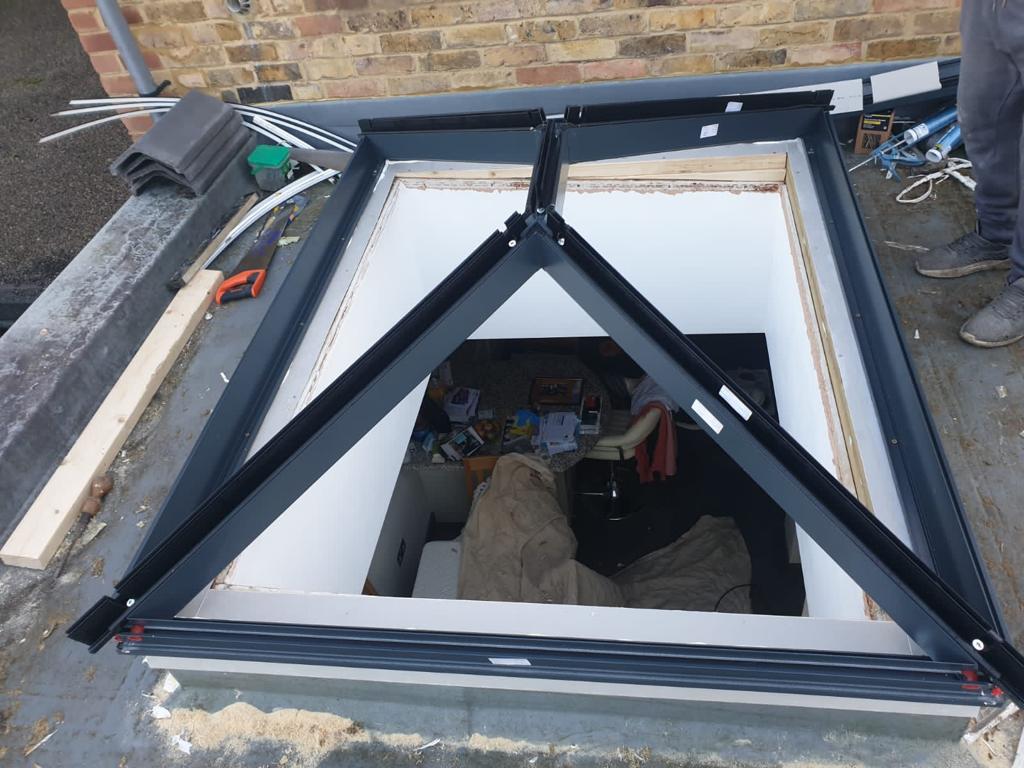
Waterproofing is, understandably, the primary concern for most homeowners considering a skylight. A poorly installed skylight is a common source of leaks, but when fitted correctly with the right flashing kit, a roof window should be completely watertight. Reputable manufacturers like Velux and Fakro supply flashing kits that are designed to integrate with specific tile and slate profiles, creating a weatherproof seal around the window. The flashing must be installed in the correct sequence, with each layer overlapping the one below to shed water away from the opening. This is a detail-oriented job, and it is one of the main reasons we recommend using an experienced roofer rather than a general builder for skylight installations.
The installation process itself usually takes one to two days for a standard roof window. The first day involves cutting the opening, installing the trimmer framework, fitting the window and flashing, and making good the internal finish. If a new internal lining or plaster finish is required, this may extend into a second day. During the installation, the roof will be open for a period, so dry weather is essential. Your roofer should be able to provide temporary weatherproofing if unexpected rain is forecast, but ideally the work should be scheduled during a settled dry spell.
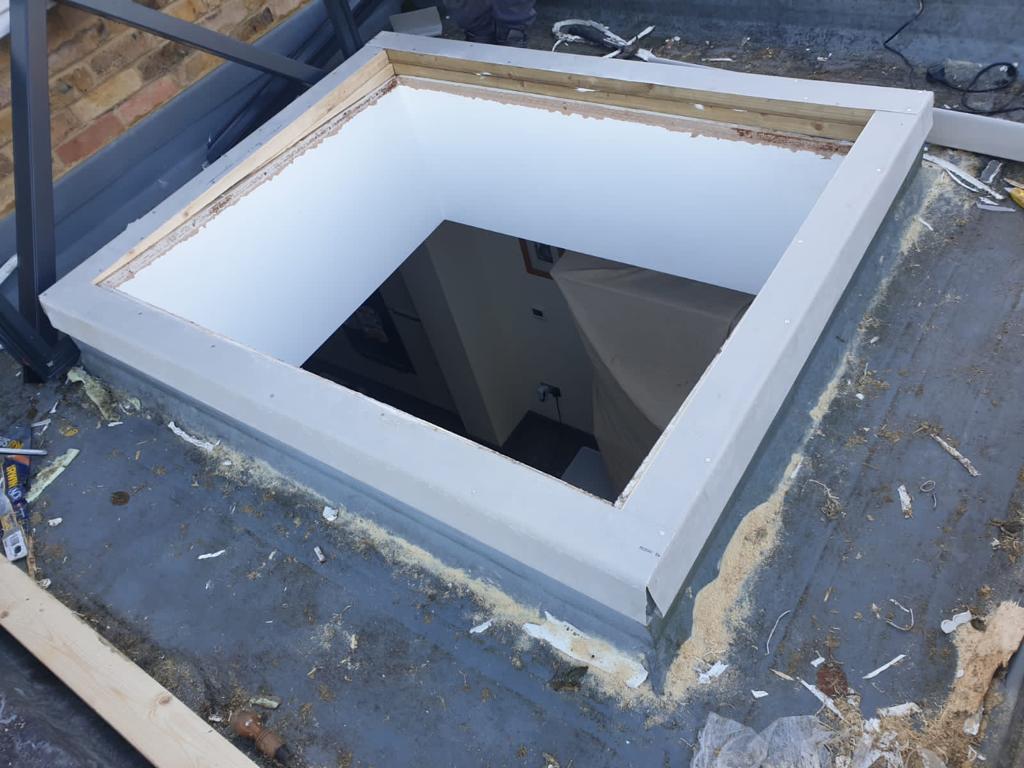
One point that is often overlooked is the internal finishing. A skylight that is simply installed into the roof plane with vertical sides to the opening below will let in less light than one where the opening is splayed — that is, where the sides of the opening are angled outward as they descend from the roof to the ceiling. Splaying the opening allows light to spread further into the room and makes the window feel larger. This is a detail that makes a real difference to the end result and is worth discussing with your installer at the planning stage.
Energy efficiency and condensation
Condensation is another concern that comes up frequently. Roof windows can be prone to condensation, particularly in rooms with high humidity such as bathrooms and kitchens. This is because the glass surface of a roof window loses heat faster than the surrounding roof, especially on cold clear nights, and moisture in the air condenses on the cold glass. Double or triple glazing significantly reduces this problem by keeping the inner pane warmer. Good ventilation in the room — whether through the window itself, an extractor fan or trickle vents — also helps by reducing the humidity level in the air. In loft conversions, ensuring that the warm moist air from the rooms below can escape through adequate ventilation is particularly important.
Energy efficiency is a legitimate consideration. Modern skylights are far more thermally efficient than those available even ten or fifteen years ago. Double-glazed units with low-emissivity coatings and argon gas filling are standard, and triple-glazed options are available for properties where thermal performance is a priority. A well-specified skylight will meet current building regulations for thermal transmittance without difficulty. It is also worth considering the solar gain — the heat that enters through the glass from direct sunlight. On south-facing roof slopes, solar gain can be significant in summer, and you may want to consider skylights with integral blinds or external awning blinds to manage overheating.
Cost and next steps
The cost of a skylight installation in the Windsor and Maidenhead area varies depending on the size and type of window, the roof material and the amount of structural work required. As a rough guide, a standard centre-pivot roof window including supply, flashing kit and installation typically ranges from around eight hundred to fifteen hundred pounds. Larger windows, electrically operated options and installations that require significant structural alterations will cost more. Tubular skylights are generally less expensive, typically between four hundred and eight hundred pounds installed, and are a cost-effective option where a full roof window is not practical. These figures are indicative and we always recommend getting a specific quotation based on a site survey.
At Maybach Building & Property Maintenance Ltd, we install skylights and roof windows across Windsor, Maidenhead and the surrounding areas as part of both new roof installations and retrofits to existing roofs. We work with all the major manufacturers and can advise on the best product for your specific situation. If you are considering adding a skylight to your home, we are happy to carry out a site visit, discuss the options and provide a detailed quotation with no obligation.